


Quick Answer
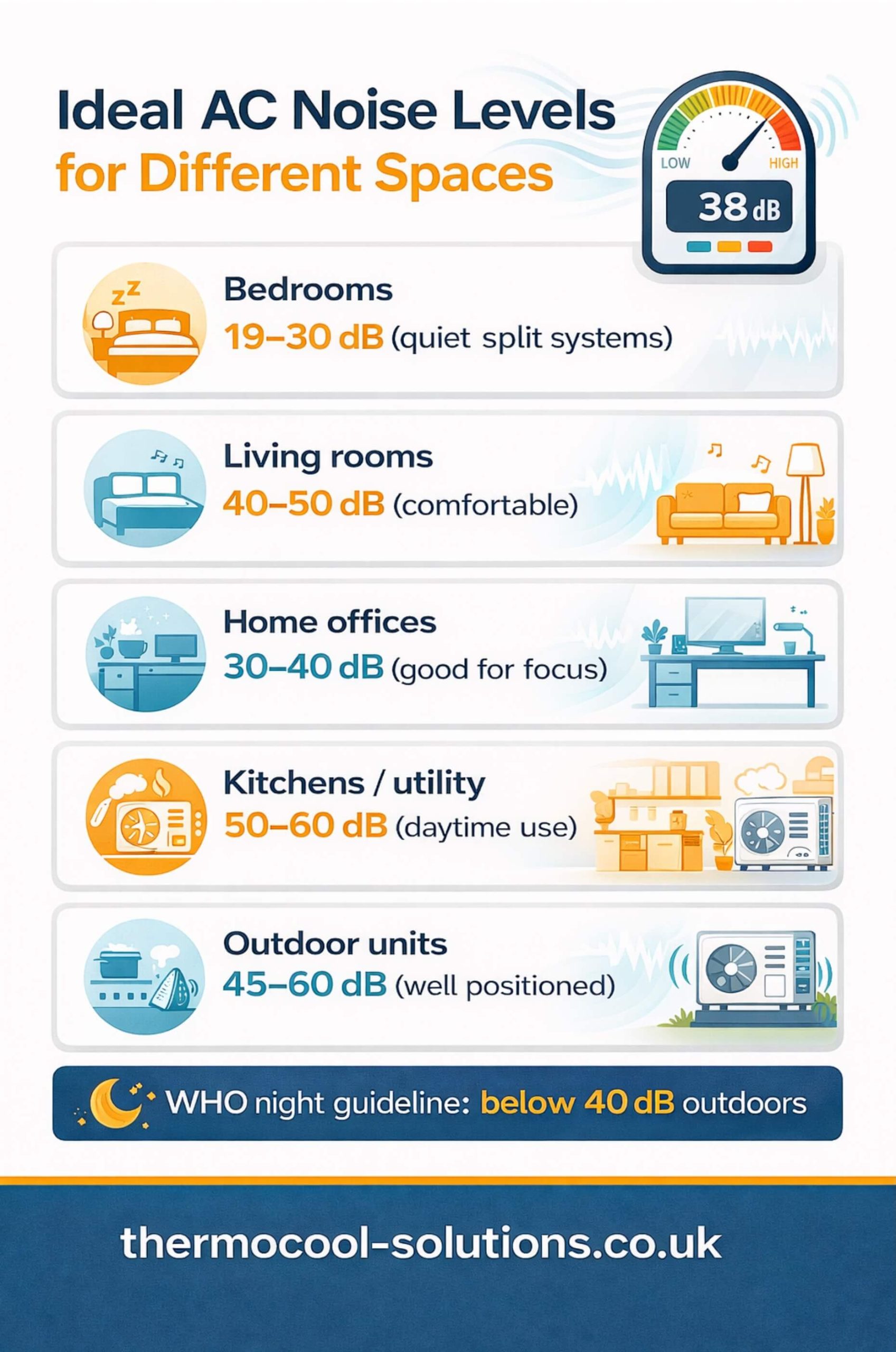
Modern split systems operate at 19-30 dB indoors (whisper-quiet), whilst portable units reach 42-65 dB (conversational volume). Aim for 40-50 dB in bedrooms at night and 50-60 dB in living areas during the day.
Anyone who’s tried sleeping next to a noisy air conditioner knows the frustration. The constant hum disrupts rest and can annoy neighbours too. If you’re considering AC for your UK home, understanding noise levels helps you choose wisely and stay comfortable.
Key Takeaways
- Split inverter systems are the quietest, operating at 19–30 dB indoors, making them suitable for bedrooms and noise-sensitive spaces. Portable units are louder at 42–65 dB, similar to normal conversation.
- UK standards BS 8233 and BS 4142 set indoor and outdoor noise limits, with BS 8233 recommending under 30 dB at night for bedrooms and linking noise above 55 dB to sleep disturbance.
- Proper installation, vibration control, outdoor unit positioning, and regular maintenance help reduce noise and meet local authority nuisance requirements.
What Do AC Noise Levels Actually Mean?
Basically, it’s just a way of explaining how loud an air conditioning unit will actually sound in everyday use. Lower decibel numbers mean a quieter system, which is especially important at night. In short, the quieter it is on paper, the less you’ll notice it at home.
Decibel Scale Basics for Homeowners
Think of decibels as a way to measure how loud something sounds. The scale isn’t straightforward though; it’s logarithmic. That means a 10 dB increase doesn’t just sound a little louder. It sounds roughly twice as loud. So the jump from 40 dB to 50 dB is far more noticeable than you might think.
| Decibel Level (dB) | Everyday Comparison | AC Application |
|---|---|---|
| 19–30 dB | Whisper, rustling leaves | Modern split system indoors |
| 40 dB | Quiet library | Premium bedroom AC |
| 50–60 dB | Normal conversation | Living room AC, outdoor units |
| 65+ dB | Vacuum cleaner | Portable air conditioner |
Even a difference of 5 dB can drastically affect comfort, especially in bedrooms where peaceful sleep depends on minimal disruption.
The human ear is surprisingly sensitive. Small changes in decibel levels make a big impact on how restful your space feels.
Noise Levels by AC Type: UK Real-World Data
This gives you a more realistic idea of how different air conditioning units sound in UK homes, not just in lab conditions. It helps put the numbers into context, so you know what’s genuinely quiet and what might be noticeable day to day.
The type you choose will have the biggest impact on how much sound you’ll live with.
Split System Air Conditioners (Quietest Option)
If peace and quiet are your priority, split systems are your best bet.
Modern split systems with inverter technology produce between 19 and 30 dB indoors. That’s quieter than a whisper. Some premium models are so silent you’ll forget they’re running.
Why are they so quiet?
The secret is in the design. The noisiest component (the compressor) sits outside, whilst the indoor unit operates with barely a hum. Inverter compressors adjust their speed smoothly rather than switching on and off abruptly, which eliminates that jarring stop-start noise.
Split systems are perfect for bedrooms, living rooms, and any noise-sensitive spaces. The outdoor unit does make 45 to 60 dB of noise, but when properly installed away from windows and bedrooms, you won’t hear it indoors.
Our domestic air conditioning service covers everything from design to installation, keeping your home comfortable, efficient, and quiet all year round.
Ducted and Central AC Systems
Ducted systems sit somewhere in the middle. They produce 30 to 50 dB indoors, depending on the design and how well the ductwork is insulated.
These systems cool your entire home through vents, which means noise can travel through the ducts if they’re not properly designed. Vent placement matters too. A poorly positioned vent near a bedroom can be more disruptive than necessary.
Ducted systems work well for whole-home cooling, but they require careful acoustic planning during installation.
Portable Air Conditioners
Portable units are the noisiest option.
They produce 42 to 65 dB, which is similar to having a normal conversation happening constantly in your room. Everything else (the compressor, fan, and motor) is housed in the same unit that sits next to you.
Portable ACs are convenient for temporary use or renters who can’t install permanent systems. But for bedrooms, they’re far from ideal.
Outdoor Condenser Units
The outdoor unit of any split or ducted system typically produces 45 to 60+ dB. Some older or poorly maintained units can reach 70 dB, which is closer to vacuum cleaner territory.
This matters most when you’re considering neighbour relations and garden use. If your condenser sits right under someone’s bedroom window or on a shared boundary, it could cause complaints.
Placement is everything here.
UK Noise Regulations and Standards for Air Conditioning
UK noise rules for air conditioning aren’t as strict as many people expect, but there are clear standards that installers need to follow. They’re mainly there to keep homes comfortable and avoid upsetting neighbours, especially at night.
Once you understand how the guidance works, it’s fairly straightforward to stay on the right side of it.
BS 8233 covers indoor residential noise and recommends bedrooms stay below 30 dB at night. Research links night-time noise above 55 dB to poor sleep and health issues.
BS 4142 assesses noise from outdoor equipment affecting neighbours and may be required for planning. Councils can enforce statutory nuisance laws, and planning permission is often needed for outdoor units, especially in flats or conservation areas.
These regulations are mainly applied through planning rules and local authority enforcement, rather than strict nationwide noise limits for every system.
Factors That Affect AC Noise in Your Home
Even the quietest air conditioner can become noisy if certain factors aren’t managed properly.
Fan speed settings are the most obvious. Higher speeds mean more noise. Most modern systems have a night mode or quiet setting that reduces fan speed for bedrooms.
Installation quality makes a massive difference. Poor mounting, lack of vibration isolation, or improper positioning can amplify noise. Anti-vibration mounts and proper securing reduce unwanted sound transmission.
Here’s what affects noise levels in practice:
| Factor | Impact on Noise | Solution |
|---|---|---|
| Fan speed | High speed can be 10–15 dB louder | Use night mode settings |
| Dirty filters | Forces the unit to work harder | Clean monthly |
| Poor mounting | Vibration amplifies sound | Install anti-vibration pads |
| Hard surfaces | Sound reflection increases noise | Add soft furnishings |
| Unit age | Older components are typically noisier | Regular servicing |
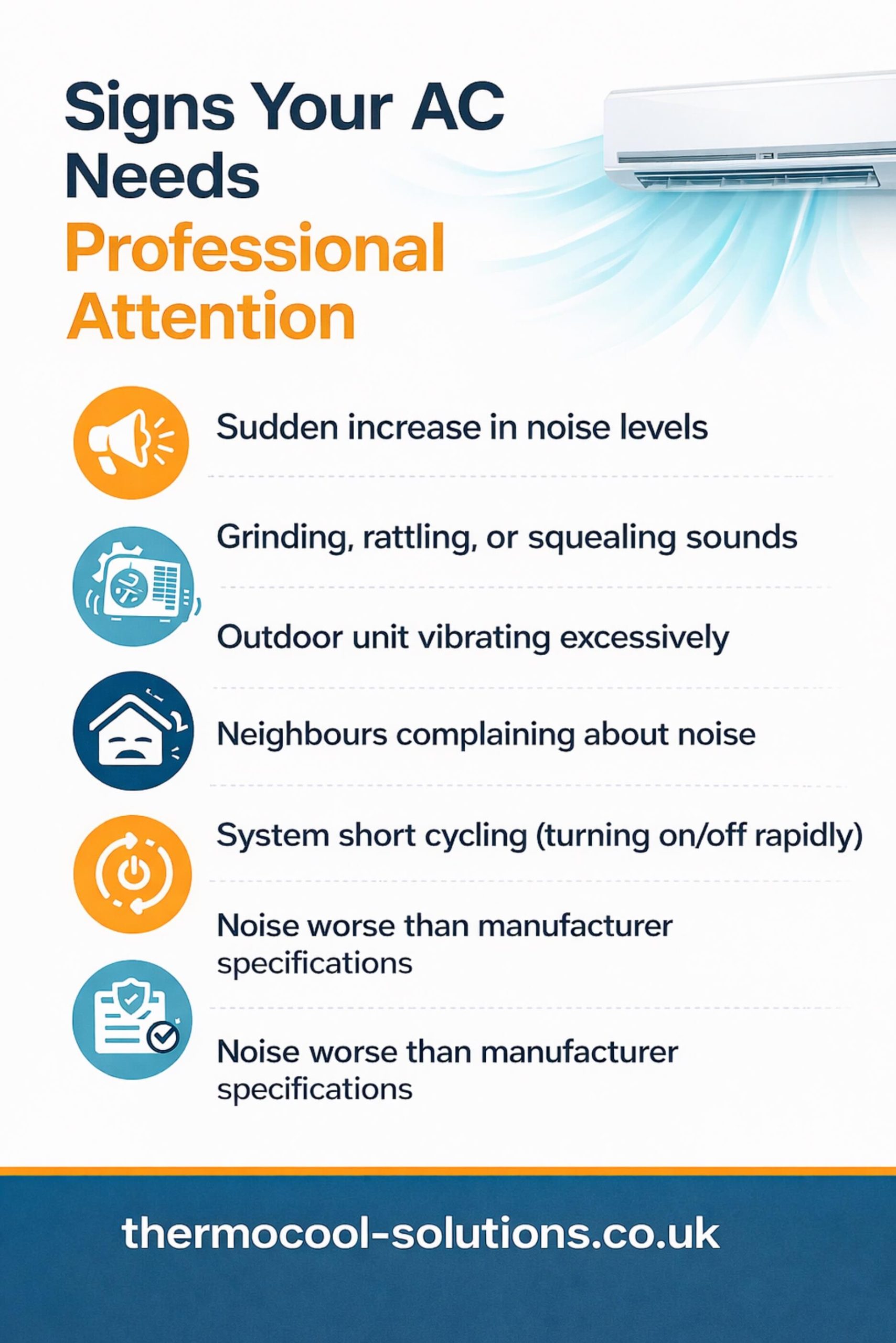
Maintenance matters too. Dirty filters force the system to work harder, which increases noise. Worn components (like bearings or fan blades) can create rattling sounds that shouldn’t be there.
Room acoustics also play a role. Hard surfaces like tile or hardwood floors reflect sound, whilst soft furnishings absorb it. Distance from living and sleeping areas is crucial for comfort.
How to Choose and Use a Quiet Air Conditioner
The UCL study on indoor soundscapes and building services shows that lower noise from building services significantly improves comfort and suitability of living and sleeping spaces, reinforcing the importance of quiet system design and placement. So, choosing the right system from the start saves you headaches (and sleepless nights) later.
Here are the key factors that determine how quiet and comfortable your air conditioning system will be in everyday use.
- Choose inverter systems: quieter operation and 30–40% lower energy use through smooth speed control.
- Check real dB ratings: aim for under 30 dB in bedrooms and 50 dB in living spaces.
- Size correctly: oversized units short cycle, creating noise and wear.
- Plan placement carefully: keep outdoor units away from bedrooms and boundaries.
- Consider UK homes and neighbours: shared walls, limited space, and sound control all matter.
In some cases, a professional acoustic assessment is worth the investment. This is especially true for mixed-use buildings or properties with sensitive neighbours.
Our air conditioning services help you choose the right setup from day one, keeping noise levels low without compromising performance.
Conclusion
Choosing a quiet air conditioner doesn’t mean weaker cooling. Inverter split systems, fitted properly and maintained, stay quiet. UK noise rules help keep your home and neighbours comfortable.
At Thermocool Solutions, we specialise in selecting and installing air conditioning systems that prioritise both performance and acoustic comfort for UK homes.
Get a free quote today for a quiet split system or help meeting local noise regulations.
FAQs
What is an acceptable AC noise level indoors?
By day, 50–60 dB suits living areas. At night, bedrooms should be 40–50 dB, ideally lower. Premium inverter split systems reach 19–30 dB, ideal for light sleepers. Comfort also depends on insulation, background noise, and personal sensitivity.
How much noise is normal from outdoor condensers?
Outdoor units usually run at 45–60 dB, similar to light street or garden noise. Correct placement away from boundaries helps prevent neighbour complaints.
Which AC type is quietest for bedrooms?
Inverter split systems are quietest at 19–30 dB. Portable units (42–65 dB) are unsuitable. Night mode and sensible placement help further.
How can I reduce AC noise at home?
Use night mode, fit anti-vibration mounts, keep filters clean, and ensure correct positioning. Professional installation is essential.
Is 50 dB or 60 dB louder in practical terms?
60 dB is roughly twice as loud as 50 dB and far more noticeable in quiet spaces.
What is the 3-minute rule for AC short cycling?
Short cycling is repeated on-off running under three minutes, causing noise and wear. It’s usually due to incorrect sizing or installation.