


Quick Answer
Modern split systems operate at 19-30 dB indoors (whisper-quiet), whilst portable units reach 42-65 dB (conversational volume). Aim for 40-50 dB in bedrooms at night and 50-60 dB in living areas during the day.
Anyone who’s tried sleeping next to a noisy air conditioner knows the frustration. The constant hum disrupts rest and can annoy neighbours too. If you’re considering AC for your UK home, understanding noise levels helps you choose wisely and stay comfortable.
Key Takeaways
- Split inverter systems are the quietest, operating at 19–30 dB indoors, making them suitable for bedrooms and noise-sensitive spaces. Portable units are louder at 42–65 dB, similar to normal conversation.
- UK standards BS 8233 and BS 4142 set indoor and outdoor noise limits, with BS 8233 recommending under 30 dB at night for bedrooms and linking noise above 55 dB to sleep disturbance.
- Proper installation, vibration control, outdoor unit positioning, and regular maintenance help reduce noise and meet local authority nuisance requirements.
What Do AC Noise Levels Actually Mean?
Basically, it’s just a way of explaining how loud an air conditioning unit will actually sound in everyday use. Lower decibel numbers mean a quieter system, which is especially important at night. In short, the quieter it is on paper, the less you’ll notice it at home.
Decibel Scale Basics for Homeowners
Think of decibels as a way to measure how loud something sounds. The scale isn’t straightforward though; it’s logarithmic. That means a 10 dB increase doesn’t just sound a little louder. It sounds roughly twice as loud. So the jump from 40 dB to 50 dB is far more noticeable than you might think.
| Decibel Level (dB) | Everyday Comparison | AC Application |
|---|---|---|
| 19–30 dB | Whisper, rustling leaves | Modern split system indoors |
| 40 dB | Quiet library | Premium bedroom AC |
| 50–60 dB | Normal conversation | Living room AC, outdoor units |
| 65+ dB | Vacuum cleaner | Portable air conditioner |
Even a difference of 5 dB can drastically affect comfort, especially in bedrooms where peaceful sleep depends on minimal disruption.
The human ear is surprisingly sensitive. Small changes in decibel levels make a big impact on how restful your space feels.
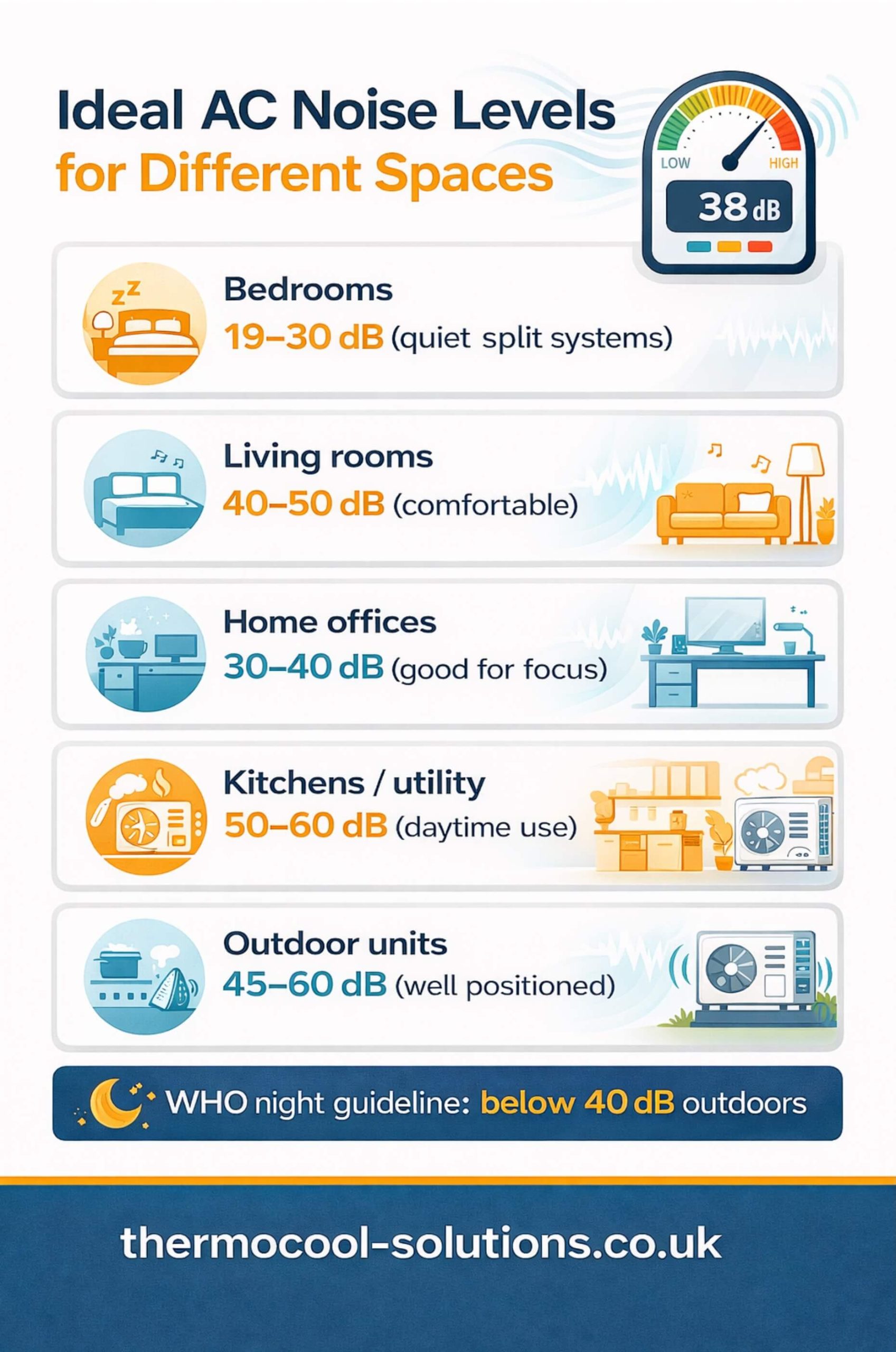
Noise Levels by AC Type: UK Real-World Data
This gives you a more realistic idea of how different air conditioning units sound in UK homes, not just in lab conditions. It helps put the numbers into context, so you know what’s genuinely quiet and what might be noticeable day to day.
The type you choose will have the biggest impact on how much sound you’ll live with.
Split System Air Conditioners (Quietest Option)
If peace and quiet are your priority, split systems are your best bet.
Modern split systems with inverter technology produce between 19 and 30 dB indoors. That’s quieter than a whisper. Some premium models are so silent you’ll forget they’re running.
Why are they so quiet?
The secret is in the design. The noisiest component (the compressor) sits outside, whilst the indoor unit operates with barely a hum. Inverter compressors adjust their speed smoothly rather than switching on and off abruptly, which eliminates that jarring stop-start noise.
Split systems are perfect for bedrooms, living rooms, and any noise-sensitive spaces. The outdoor unit does make 45 to 60 dB of noise, but when properly installed away from windows and bedrooms, you won’t hear it indoors.
Our domestic air conditioning service covers everything from design to installation, keeping your home comfortable, efficient, and quiet all year round.