
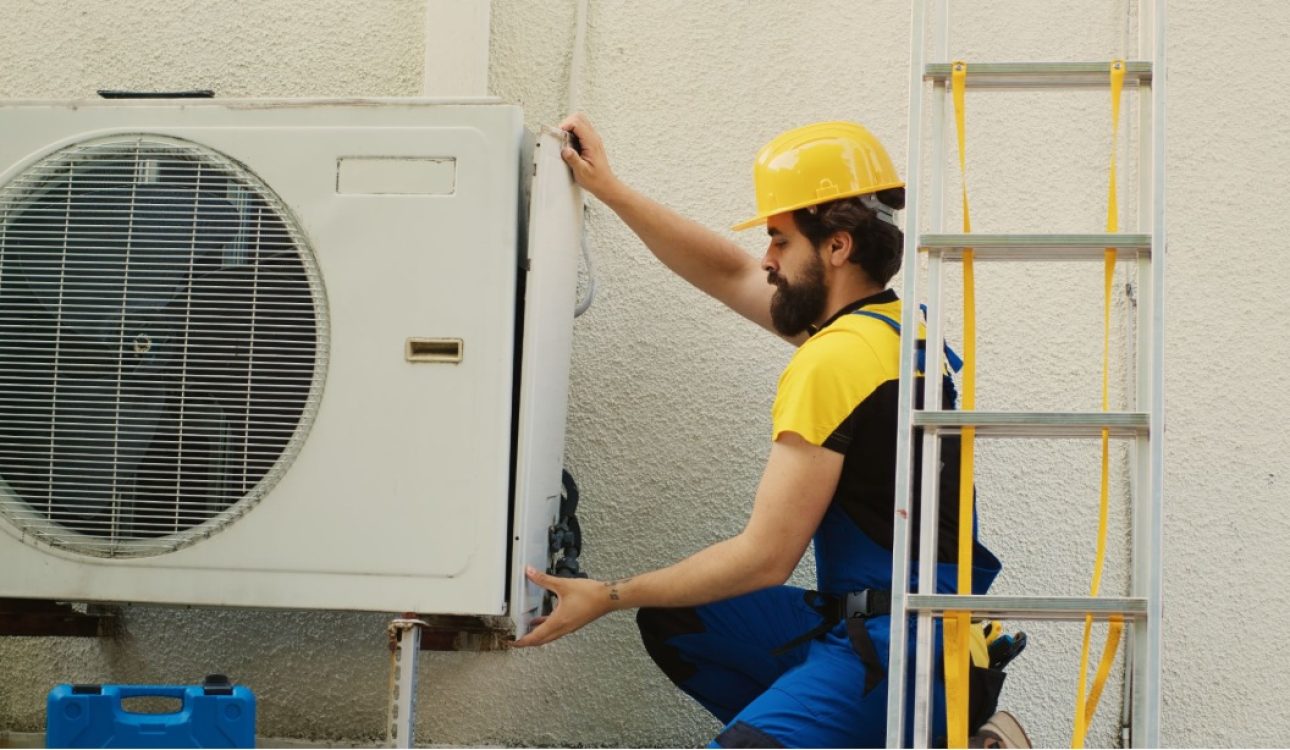

Quick Answer: Domestic air conditioning systems should receive professional servicing each year, while heavily used systems may need more frequent visits. TM44 and F Gas checks apply to qualifying systems separately.
How often should air conditioning be serviced? For many UK homes, one professional service each year is a sensible starting point. Systems used for heating and cooling may need attention twice a year. Commercial units can need shorter service intervals because they often run for longer periods. Legal checks for F Gas and TM44 follow separate rules from routine servicing.
Key Takeaways
- Annual servicing suits many domestic systems, especially units used mainly during warmer months.
- Heavy use can justify shorter intervals, particularly where cooling and heating operate across different seasons.
- Commercial systems often need closer maintenance, based on operating hours, occupancy, contamination and system demands.
- TM44 and F Gas checks are separate duties, so a statutory inspection does not replace routine servicing.
How Often Should Domestic Air Conditioning Be Serviced?
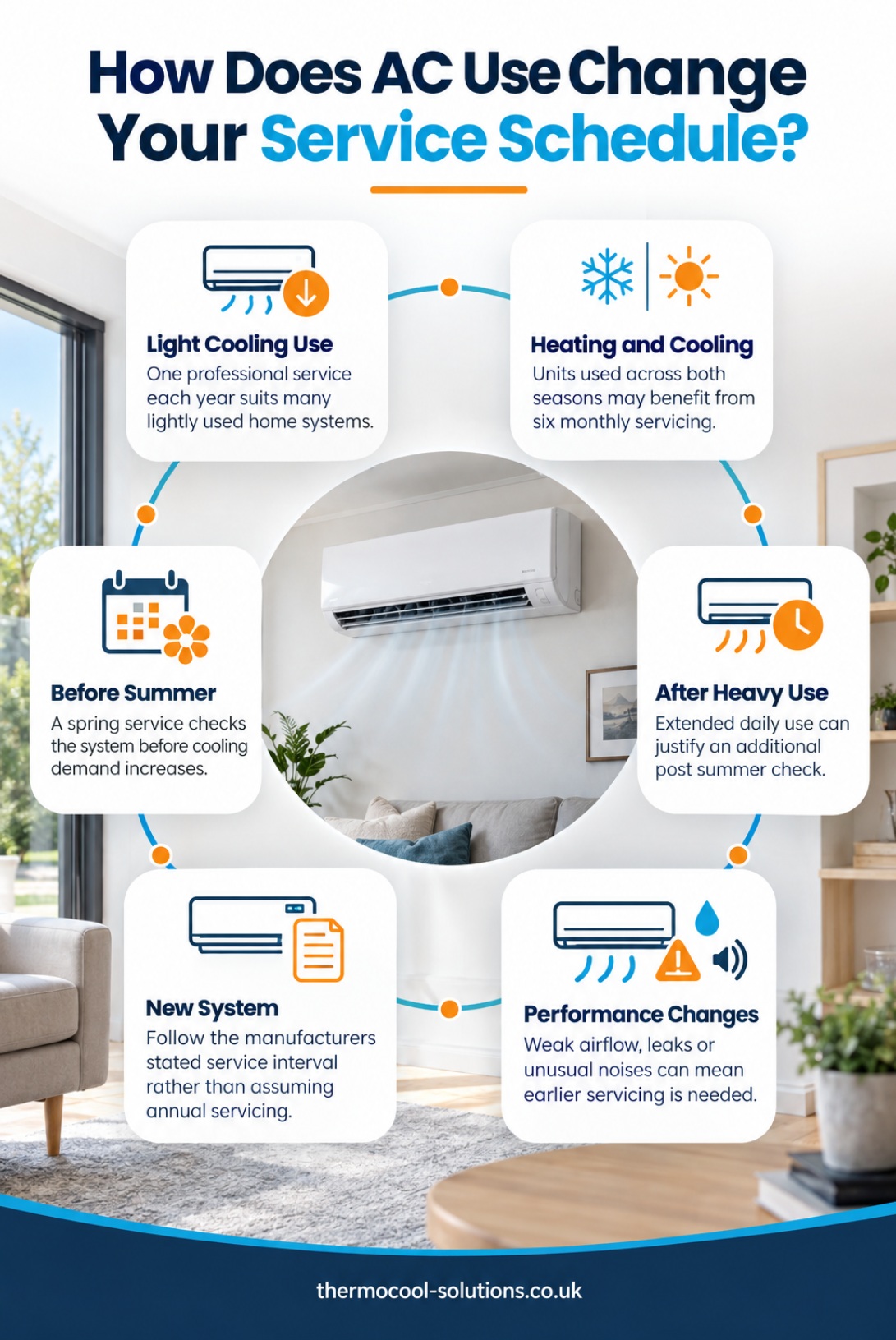
For most domestic systems, one professional service each year is a sensible baseline. The right interval can change depending on how heavily the system is used and how it operates across the year.
Annual AC Servicing
An annual service normally checks the parts that affect system condition and performance. This can include the filters, indoor unit, outdoor unit, drainage, electrical connections and refrigerant related components.
The technician can also check overall operation and identify issues that need attention.
A yearly visit gives the homeowner a regular point for these checks. It can also prepare the system before another period of heavier cooling demand.
Our professional air conditioning maintenance and service can provide a planned point for this work each year.
Twice Yearly AC Servicing
A six month service interval can suit domestic systems that operate heavily across different seasons. This can apply where the same unit provides both heating and cooling.
Long daily operating periods can place greater demand on filters, fans, drainage and other working parts. Two visits can divide the maintenance cycle across the year.
A practical schedule could place one service in spring before the main cooling season. A second visit can then follow the heavier summer period.
Servicing Before Summer
Spring is a useful time for the annual service if the system is mainly used for cooling. The unit can be checked before demand increases.
This gives the technician a chance to inspect the filters, drainage, outdoor unit and overall cooling performance. Any issue can then be addressed before the system starts running for longer periods.
Booking before the warmer months can also avoid discovering a fault during a period of high demand.
Servicing After Heavy Use
An additional service can make sense after an unusually demanding period. This could follow a long hot summer, continuous daily use or extended operation in a heavily occupied room.
The purpose is to assess the system after sustained operation. This can be useful where the level of use was far higher than the normal household pattern.
This visit is separate from the standard annual service. It forms part of a more cautious maintenance plan for heavily used equipment.
Servicing New AC Systems
A new air conditioning system still needs a maintenance plan. Low use during the first year does not make the equipment maintenance free.
The correct interval depends on the manufacturer, the installation and the terms attached to the warranty. Some manufacturers specify a particular service period. Installers may also provide commissioning information or servicing conditions.
Check the maintenance schedule for the exact model. A universal interval should not be assumed for every new system.
How Often Should Commercial Air Conditioning Be Serviced?
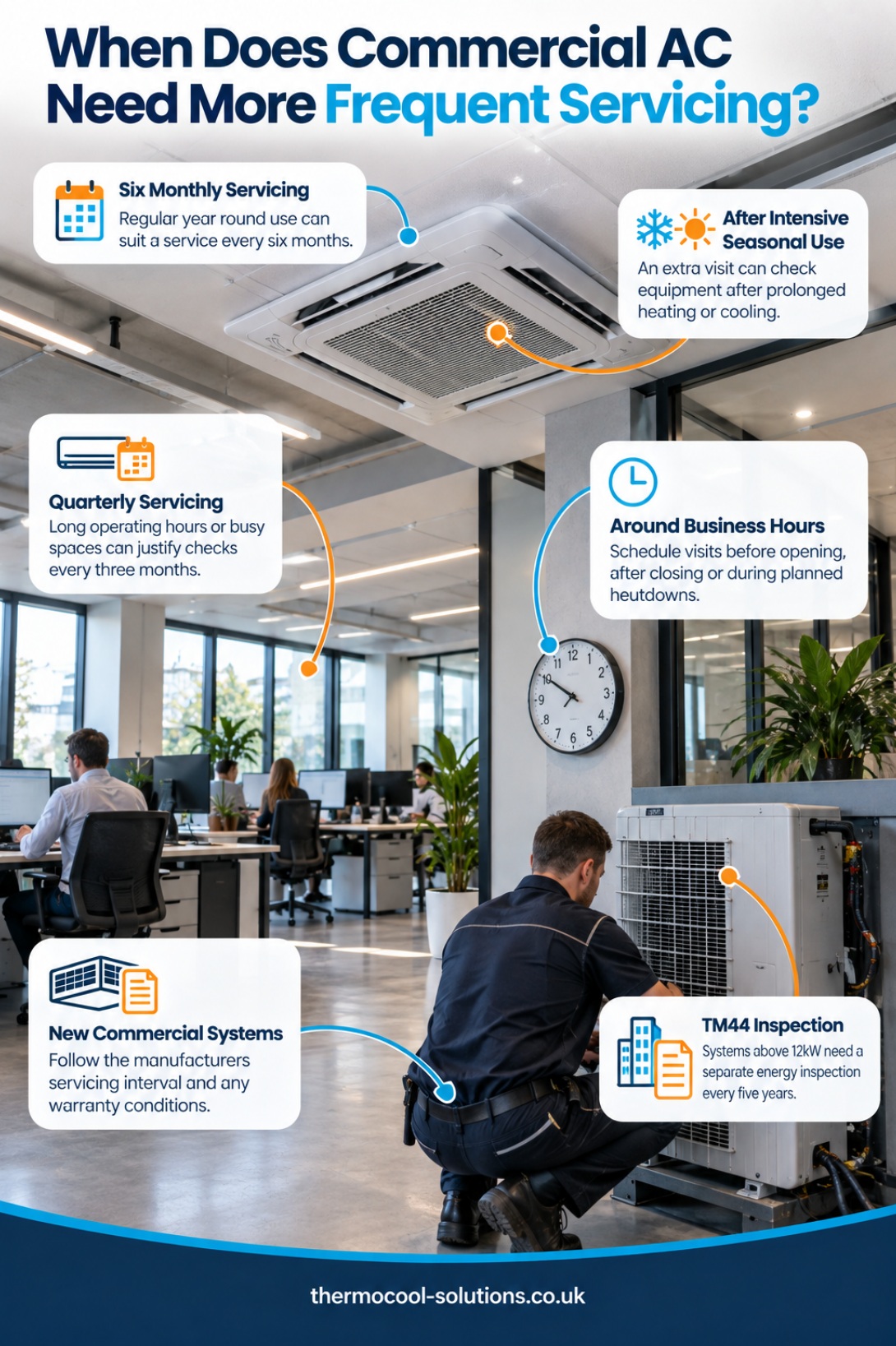
Commercial air conditioning often needs servicing every six to twelve months. Systems that run for long hours or serve busy spaces may need servicing every three months.
Six Monthly Commercial AC Servicing
A six monthly schedule suits systems that operate regularly throughout the year. One service can take place in spring before heavier cooling demand. Another can follow the summer period.
This also works well where the system provides heating during colder months. The second visit can check the equipment after several months of sustained use.
Six monthly servicing gives businesses a regular maintenance point across the year. It can also reduce the length of time between checks when equipment operates regularly.
Quarterly AC Servicing
Quarterly servicing can suit systems that operate for long hours or serve heavily occupied areas.
Offices, shops, restaurants and hotels can place greater demands on air conditioning. Equipment may run throughout the working day, every day.
A three monthly schedule gives the system a professional check four times each year. This can be useful where a breakdown could disrupt staff, customers or trading.
Quarterly servicing is a maintenance decision based on operating demands. It is not a universal legal requirement. Businesses that need a structured maintenance plan can use our commercial air conditioning service to arrange regular professional servicing.
Servicing Around Business Hours
The service interval is separate from the time of day when the visit takes place. Businesses can arrange servicing before opening, after closing or during planned shutdowns.
This can reduce disruption during normal operations. It also gives staff a clear maintenance window.
The visit time can change to suit the business. The servicing frequency should still reflect how the system operates.
Servicing After Intensive Seasonal Use
An additional service can be useful after a period of sustained cooling or heating. This could apply after a long summer or several months of daily operation.
A post summer service allows the system to be checked after its busiest cooling period. It can also prepare the equipment for continued heating during colder months.
This is an additional maintenance visit. It does not replace the normal servicing schedule.
Servicing New Commercial Systems
A new commercial system still needs a planned maintenance schedule. The correct interval depends on the equipment, installation and operating pattern.
Start by checking the manufacturer’s recommended interval. Commissioning information may also set out servicing requirements. Warranty terms can contain specific servicing conditions.
Larger systems also have a separate statutory inspection requirement. According to GOV.UK, air conditioning systems above 12kW must receive a TM44 inspection at intervals of no more than five years.
The five year period is the maximum gap between statutory inspections. It should not be treated as a five year servicing interval.
What Can Change How Often Air Conditioning Needs Servicing?
Service frequency should reflect the conditions the system faces. Usage hours, heating demand, cooling demand, building use, dust, contamination and system condition can all affect the maintenance plan.
A lightly used bedroom split unit may need a different schedule from a commercial system that operates every day. Older equipment may also need closer attention if its condition has changed.
According to BESA, its air conditioning maintenance intervals approach bases inspection and cleaning needs on system type, building use and contamination risk. That supports a risk based maintenance plan rather than one fixed interval for every installation.
The key question is therefore how the system actually operates.
What Are the Signs Your Air Conditioning Needs Servicing Sooner?
A system may need attention before its planned service if its performance or condition changes.
Signs can include:
- Reduced cooling or heating
- Weak airflow
- Unusual noises
- Unpleasant smells
- Water leaks
- Icing
- Higher energy use or repeated faults.
These symptoms can have several possible causes. Reduced airflow may relate to dirty filters or another component issue. Water around the indoor unit could have several explanations too.
A professional service can identify the cause rather than relying on the symptom alone.
Waiting for the annual visit is not sensible when the system is already showing a clear change in performance.
What Happens If You Do Not Service Air Conditioning Regularly?
Missed servicing can affect performance, running costs and reliability. Dirt can build up. Components can deteriorate. Refrigerant problems can also increase energy use.
Research cited by Historic England on HVAC maintenance and energy efficiency found that scheduled maintenance programmes for commercial HVAC systems could deliver 15% to 20% energy savings compared with unmaintained systems.
That figure does not apply to every air conditioning unit. Actual savings depend on the system, its condition and how it operates.
Regular servicing can also identify smaller issues before they develop into larger repair problems. That can help reduce disruption and keep the system performing as intended.
Are Air Conditioning Services Legally Required in the UK?
There is no single UK law requiring every domestic air conditioning unit to receive a professional service every year. Annual servicing is generally a maintenance recommendation rather than a universal legal requirement.
Statutory duties apply to certain systems. TM44 inspections cover air conditioning systems above 12kW in England and Wales. These inspections must take place at intervals of no more than five years.
F Gas leak checks form a separate regime for systems that contain qualifying refrigerant charges. The required interval depends on the amount of refrigerant and its global warming potential.
For example, systems containing 5 tonnes CO2e or more generally need annual leak checks. The interval becomes shorter at higher thresholds.
These legal checks do not replace routine servicing. The government guidance confirms that inspection, maintenance and cleaning should take place more frequently than the statutory energy assessment.
Why Is Air Conditioning Servicing Becoming More Important in the UK?
Air conditioning is becoming more common in UK homes. Recent research from the Energy Demand Research Centre found that 4.3% of English homes, around 1.06 million properties, used air conditioning according to analysis of the English Housing Survey 2023–24. That is roughly double the 2% recorded in 2017.
That rise means more households now need to manage servicing for the first time. Many units have only been installed in recent years.
Cooling demand is also becoming a larger part of household energy use. As more homes rely on AC, understanding the difference between routine servicing and statutory checks becomes increasingly important.
FAQs
How often should air conditioning be serviced?
Annual professional servicing is a sensible starting point for many domestic systems. Heavily used units may need shorter intervals.
Does home air conditioning need servicing every year?
A yearly service is a practical maintenance baseline. The manufacturer may recommend a different interval for a specific model.
How often should commercial air conditioning be serviced?
Six monthly servicing can suit many commercial systems. Heavily used equipment may need quarterly maintenance.
What happens during an air conditioning service?
A technician checks the indoor and outdoor units, filters, drainage, electrical parts, refrigerant related components and overall performance.
Can I clean my air conditioning unit myself?
Basic filter cleaning can usually be carried out between professional visits. Internal servicing and refrigerant related work need appropriate competence.
Conclusion
Annual professional servicing is a sensible baseline for many domestic systems. Commercial equipment may need shorter intervals based on usage and operating conditions. TM44 and F Gas checks follow separate rules and do not replace routine servicing. Regular maintenance can help identify problems before they affect performance, efficiency or reliability.
Need to keep your air conditioning running properly? Talk to our team about a service or ongoing maintenance plan for your system.