

Quick Answer: Wall-mounted air conditioning units are the practical choice for single rooms in UK homes. The right model depends on room size, noise tolerance, efficiency, and whether you need heating as well as cooling
UK summers are becoming increasingly difficult to manage without reliable cooling. Wall-mounted air conditioning units remain the most popular choice for single-room installations due to their efficiency, performance, and year-round heating capabilities. However, not every model delivers the same results.
Differences in noise levels, running costs, smart features, and overall performance can make one unit a much better fit for your home than another.
Key Takeaways
- Wall-mounted units work best in single rooms up to around 50 square metres. Larger or multi-room setups are better served by cassette or multi-split systems.
- Mitsubishi Electric and Daikin lead on noise performance, making them the stronger choices for bedrooms and home offices.
- A certified engineer must fit all wall-mounted split systems. Refrigerant pipework is subject to the same certification requirements.
The Best Wall-Mounted Air Conditioning Units at a Glance
Efficiency ratings, noise levels, and heating capability vary far more between models than the price tags alone suggest. A cheaper unit that runs noisily or struggles to heat in winter will cost more in the long run than a well-matched premium model.
If you are unsure which specification suits your room and want a quick comparison of the leading models, the table below shows the key details side by side:
| Brand and Model | Cooling Capacity | Heating Function | Energy Rating | Noise Level (Indoor) | Typical Installed Cost | Best Suited Room |
|---|---|---|---|---|---|---|
| Mitsubishi Electric MSZ-LN | 2.5–5 kW | Yes | A+++ | 19–22 dB | £1,500–£2,200 | Bedroom, Home Office |
| Daikin FTXM-R | 2.0–5.0 kW | Yes | A+++ | 20–25 dB | £1,400–£2,000 | Living Room, Bedroom |
| Fujitsu ASYG-KG | 2.0–3.5 kW | Yes | A++ | 19–24 dB | £1,300–£1,900 | Bedroom, Home Office |
| Panasonic CS-TZ | 2.0–5.0 kW | Yes | A+++ | 20–26 dB | £1,200–£1,800 | Living Room, Conservatory |
| Toshiba RAS-B | 2.5–5.0 kW | Yes | A++ | 21–27 dB | £1,100–£1,700 | Conservatory, Larger Rooms |
| LG S Series | 2.5–3.5 kW | Yes | A++ | 21–28 dB | £900–£1,400 | Home Office, Budget Installs |
| Midea MSMABU | 2.6–3.5 kW | Yes | A+ | 24–30 dB | £700–£1,100 | Budget, Secondary Rooms |
Installed costs cover supply, labour, pipework, and commissioning. They vary based on installation complexity, pipe run length, and where the outdoor unit goes.
Best Wall-Mounted Air Conditioning Units by Room and Budget
Where the unit goes determines everything.
A bedroom needs near-silent operation overnight. A conservatory needs raw cooling power to handle direct sun. A home office needs something that will not distract during calls. Each room type calls for a different set of priorities, and the right brand follows from that.
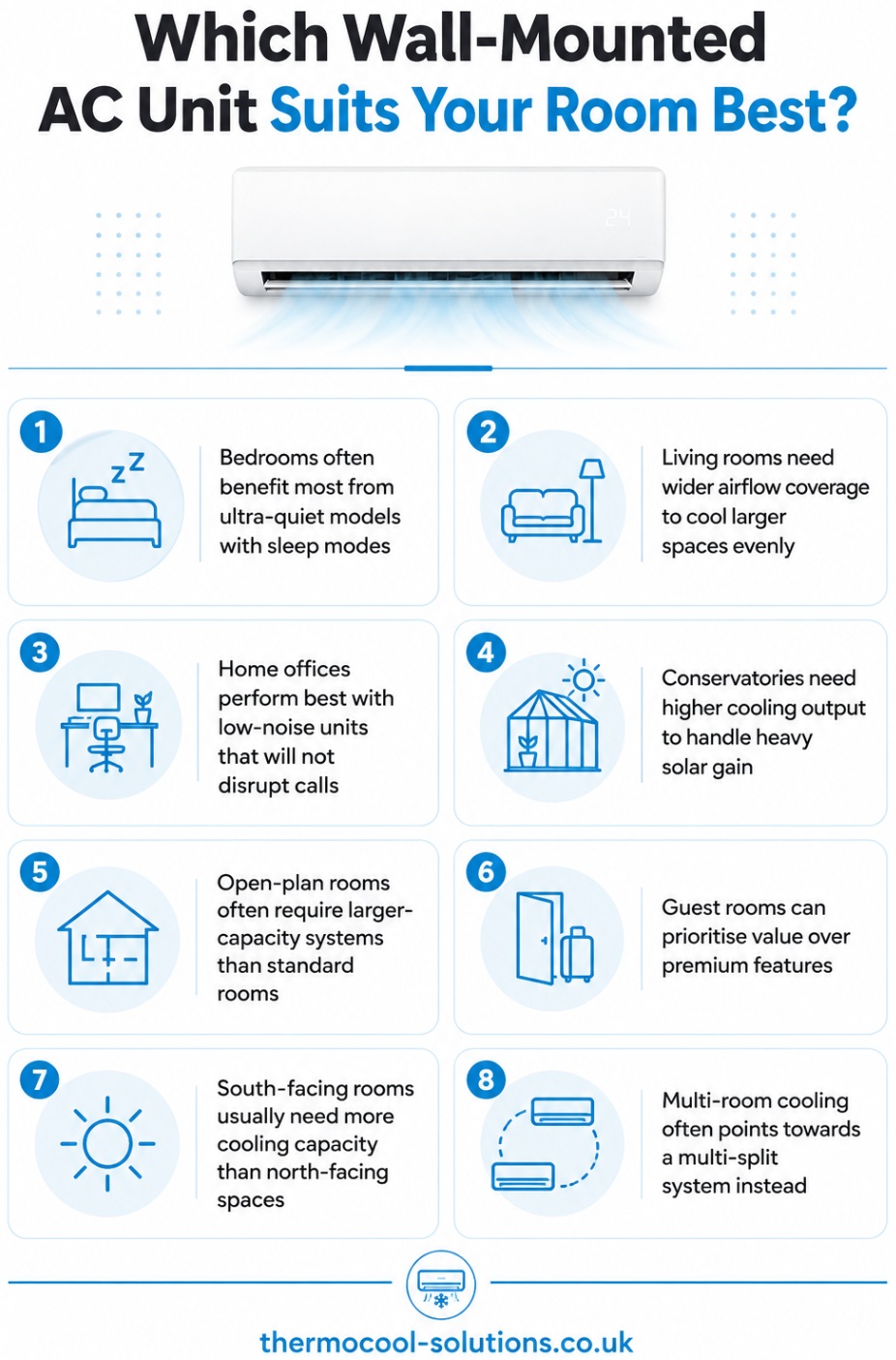
Here is how the leading options stack up across the main use cases:
Best for Bedrooms
Bedrooms demand the quietest possible background hum, especially when the unit runs overnight. Sleep mode matters here, as does how well the unit holds a set temperature without cycling loudly on and off during the night.
Brands to consider:
Mitsubishi Electric MSZ-LN (19 dB at its lowest setting, no current rival matches it at the same output)
Daikin FTXM-R (sleep mode that gradually adjusts temperature through the night without disturbing you)
Fujitsu ASYG-KG (human sensor that drops output automatically when the room is empty).
Best for Living Rooms and Open-Plan Spaces
Bigger rooms need wider airflow coverage, not just more raw output. A unit that blasts cold air straight ahead is far less useful than one that pushes air across the full width of the room consistently.
Brands to consider:
Daikin FTXM-R (wide horizontal airflow angle with strong reach across larger floor areas)
Panasonic CS-TZ (nanoe-X air purification, handy in rooms used for cooking or where someone has allergies)
Mitsubishi Electric MSZ-AP (scales up to 7.1 kW for rooms where smaller units would fall short in a proper UK heatwave).
Best for Home Offices
Home offices run on predictable hours, so scheduling and fast cool-down matter more than continuous operation. Background noise during calls and meetings is worth getting right before installation day.
Brands to consider:
LG S Series (fast cooling response and app-based scheduling, well matched to rooms used only during working hours)
Fujitsu ASYG-KG (low background noise without paying premium Mitsubishi Electric prices)
Mitsubishi Electric MSZ-LN (the quietest available option if noise is the one thing you will not compromise on).
Best for Conservatories
Conservatories are the toughest rooms in any UK home to cool. Multiple glazed sides and direct sun push heat loads far higher than a standard room of the same size. You need sustained output, not just a strong peak.
Brands to consider:
Toshiba RAS-B (handles high and sustained heat loads reliably, performs well in heating mode through autumn and winter too)
Daikin FTXM-R (consistent output under prolonged direct solar gain)
Panasonic CS-TZ (slight edge over the others in rooms with sun exposure from multiple angles at once).
Best Budget Wall-Mounted Air Conditioning Unit
Budget models involve trade-offs on noise and smart features. They work well in secondary rooms or spaces that are not used daily, where those trade-offs matter less.
Brands to consider:
LG S Series (Wi-Fi control and reliable heating at a meaningfully lower installed cost than premium brands)
Midea MSMABU (entry-level option for infrequent-use rooms where noise tolerance is higher)
TCL TAC series (basic reliable cooling for spaces where smart features and quiet operation are not priorities).
Best Premium Wall-Mounted Air Conditioning Unit
Premium models earn their price in daily-use rooms where consistency, quietness, and long-term reliability matter more than upfront savings.
Brands to consider:
Mitsubishi Electric MSZ-LN (leads the category on noise, build quality, and long-term reliability)
Daikin FTXM-R (competes closely on efficiency and has one of the strongest dealer and service networks in the UK)
Panasonic CS-TZ (adds built-in air purification that the other two do not include as standard).
Best for Heating and Cooling
If you want a unit that earns its keep year-round, heating performance at low outdoor temperatures is what separates the contenders. UK winters rarely drop below minus 10°C, but a unit that holds efficiency in the cold is worth choosing for year-round use.
Brands to consider:
Mitsubishi Electric MSZ-LN (Hyper Heat technology holds effective output down to minus 15°C outdoors)
Daikin FTXM-R (efficient down to around minus 10°C, which covers the coldest a UK winter typically delivers)
Fujitsu ASYG-KG (performs in the same range as the Daikin at a slightly lower price point).
Quietest Wall-Mounted Air Conditioning Unit
Headline noise figures are measured at the lowest fan setting. Real-world comparisons at mid-range speeds matter just as much, especially when the room is still dropping to target temperature and the unit needs to work harder.
Brands to consider:
Mitsubishi Electric MSZ-LN (19 dB at the lowest fan setting, no competitor currently matches this at the same output range)
Daikin FTXM-R (19 to 20 dB at its lowest, though mid-range fan speeds vary more between units than the headline figures suggest)
Fujitsu ASYG-KG (competes closely with the Daikin across the full fan speed range rather than just at the minimum setting).
How Different Wall-Mounted Air Conditioning Units Compare
Performance gaps between brands are narrower than marketing suggests in some areas and wider than expected in others.
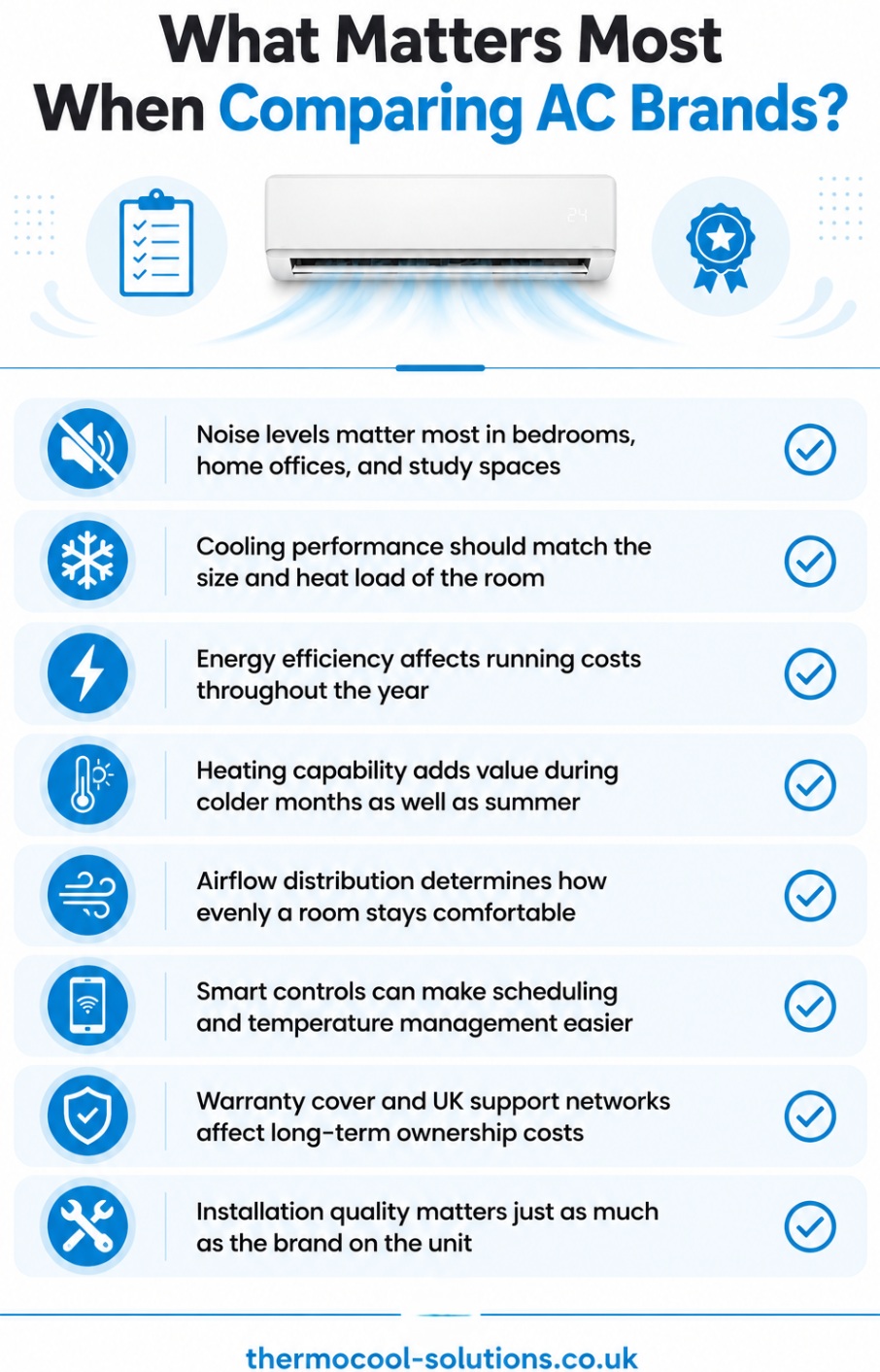
The areas that genuinely separate models in daily UK use are:
Cooling Performance
Output in kW tells only part of the story. How well the unit distributes air across the room matters just as much. Cooling performance depends on factors such as:
- A 3.5 kW versus 4.0 kW capacity rating
- Horizontal air throw distance
- Air distribution across the room
- Indoor unit positioning
Rooms with high ceilings, south-facing glazing, or poor insulation need more output than standard room-size guides suggest.
Energy Efficiency Ratings
A+++ rated units cost considerably less to run annually than A+ models at the same output. The gap widens in homes where the unit runs for extended daily periods. Long-term savings are influenced by:
- System efficiency rating
- Annual running costs
- Household usage patterns
- Electricity tariff rates
Noise Levels
Indoor noise matters far more than outdoor noise for the vast majority of UK homeowners. Low-noise performance is particularly important for:
- Bedrooms
- Home offices
- Guest rooms
- Study areas
Units operating below 22 dB on their lowest fan setting are less likely to disturb sleep, concentration, or everyday activities. Outdoor unit noise is worth checking separately if the condensing unit faces a neighbour’s boundary or garden.
Smart Controls and Wi-Fi Features
App-based control is standard across all premium models. The main differences usually involve:
- Scheduling options
- Geofencing capabilities
- Voice assistant compatibility
- Smart home integration
Mitsubishi Electric’s MELCloud and Daikin’s Onecta app both support multi-unit management, which matters in homes where more than one indoor head is installed.
Warranty and Manufacturer Support
Mitsubishi Electric and Daikin both offer extended warranties when units are installed and registered by certified engineers. Warranty cover typically depends on:
- The manufacturer chosen
- Product registration requirements
- Installer accreditation status
- The length of cover offered
Parts availability and UK-based technical support are worth checking before committing to a less established brand.
How to Choose the Right Wall-Mounted Air Conditioning Unit
Getting the specification wrong at the selection stage is expensive to fix afterward. Several factors shape the right choice beyond brand preference and budget.
Before selecting a unit, pay close attention to the following factors:
Choosing the Correct Unit Size
Room area is the starting point, not the final answer. Cooling demand is influenced by:
- Ceiling height
- Window and glazing area
- Insulation performance
- Number of occupants
A south-facing room may need 30 to 40% more output than a same-sized north-facing room. Undersizing leads to the unit running continuously without ever reaching the target temperature.
Single-Room vs Multi-Room Systems
A single wall-mounted unit covers one room well. Two or more rooms, or rooms on different levels, usually point toward a multi-split system with one outdoor unit serving multiple indoor heads.
Our commercial air conditioning service covers multi-split, cassette, ducted, and VRF options for anyone comparing system types before committing.
Energy Efficiency and Running Costs
UK cooling demand currently accounts for around 10% of total electricity use in domestic and non-domestic buildings. Running a lower-efficiency unit daily across a warm summer adds meaningfully to electricity bills.
The Met Office reports UK temperatures have risen around 0.25°C per decade since the 1980s. The last three years have all ranked in the UK’s top five warmest on record. Longer and warmer summers make efficiency a more significant long-term factor than it was even five years ago.
Heating Functions and Year-Round Use
Reverse-cycle wall-mounted units provide efficient heating as well as cooling. The efficiency advantage comes from:
- Transferring heat rather than generating it
- Lower electricity consumption
- Favourable operating conditions
- Improved seasonal performance
For rooms that rely on electric panel heaters or portable radiators, a wall-mounted unit can reduce heating costs while adding summer cooling capability.
Installation Considerations
Outdoor unit position, pipe run length, wall penetration, and condensate drainage all affect installation cost and complexity. F-gas regulations ban single split systems under 3 kg refrigerant with a GWP above 750 from 2025 onwards.
REFCOM certification is required for engineers handling refrigerant pipework. Installation by an uncertified contractor carries legal and warranty implications that are difficult to resolve after the fact.
How Much Does a Wall-Mounted Air Conditioning Unit Cost?
Installation costs vary more than unit prices across the UK market. Budgeting for both from the start avoids surprises when quotes come in.
Here is what to expect across each cost element:
Typical Unit Prices by Brand
Entry-level models from LG, Midea, and TCL range from £400 to £700 for the indoor and outdoor unit combined.
Mid-range Daikin, Panasonic, and Toshiba units run from £700 to £1,200. Premium Mitsubishi Electric and Daikin models start around £1,000 and can exceed £1,800 for top-specification units.
Installation Costs
Labour, pipework, mounting brackets, electrical connection, and commissioning typically add £600 to £1,000 on top of the unit cost for a standard single-room installation.
Longer pipe runs, difficult access, or complex drainage routes push that figure higher. A straightforward installation with a short pipe run keeps costs toward the lower end of that range.
Running Costs in the UK
A 3.5 kW A+++ unit running four hours daily across a three-month summer costs roughly £80 to £120 in electricity at current UK rates.
The same usage on an A+ unit costs closer to £140 to £180. Year-round use in heating mode adds to annual running costs but typically replaces spending on other heating sources.
Are Wall-Mounted Air Conditioning Units Worth It?
For the right room and the right household, the answer is straightforwardly yes. The case comes down to two honest considerations:
Benefits for UK Homes
A wall-mounted unit provides precise temperature control that portable fans and open windows cannot match during a prolonged warm spell. Overheating is a genuine health risk. The Committee on Climate Change estimates overheating-related mortality could rise from 2,000 deaths per year in 2015 to 7,000 per year by the 2050s.
CIBSE TM59 guidance sets the standard for assessing overheating risk in UK homes. It recommends early mitigation as part of any residential design strategy.
Potential Drawbacks to Consider
Upfront installed cost remains the biggest barrier for many UK homeowners. Annual servicing is non-negotiable for maintaining efficiency and filter condition.
Properties where outdoor unit placement is restricted, such as flats or listed buildings, may face planning complications before any installation can proceed.
Who Benefits From Air Conditioning?
Some rooms are simply harder to keep comfortable than others. Upper-floor bedrooms often stay warm long after the sun goes down. Cooling can be particularly beneficial in:
- Home offices
- South-facing rooms
- Spaces with large windows
- Areas exposed to afternoon sun
Conservatories face even bigger temperature swings and can become uncomfortably hot during sunny weather.
These are some of the most common reasons homeowners choose air conditioning. A properly sized wall-mounted unit provides reliable cooling when temperatures rise and efficient heating when they fall.
Our domestic air conditioning service covers installations across Leeds and Yorkshire, helping homeowners create a more comfortable living environment throughout the year.
FAQs
What Is the Best Wall-Mounted Air Conditioning Unit for a UK Home?
It depends on the room. Mitsubishi Electric is a strong choice for bedrooms, while Daikin performs well in larger living spaces. LG offers good value for budget-focused installations.
Which Wall-Mounted Air Conditioning Brand Is Reliable?
Mitsubishi Electric and Daikin are widely regarded as the most reliable brands. Both have strong UK support networks and excellent long-term reputations.
Do Wall-Mounted Air Conditioning Units Provide Heating?
Yes. Most modern wall-mounted units provide both cooling and heating through a built-in heat pump system.
How Noisy Are Wall-Mounted Air Conditioning Units?
Premium models can operate from as little as 19 dB. Most domestic units are quiet enough for bedrooms, home offices, and living areas.
Do You Need Planning Permission for a Wall-Mounted Air Conditioning Unit?
Usually not for houses. However, listed buildings, flats, and some conservation areas may require approval before installation.
How Long Do Wall-Mounted Air Conditioning Units Last?
A quality system typically lasts 15–20 years with regular servicing and maintenance.
Conclusion
Wall-mounted units cover the majority of single-room cooling and heating needs in UK homes effectively. The right choice depends on room size, noise tolerance, efficiency requirements, and whether year-round use is the goal.
For help choosing the correct system, visit our domestic air conditioning page or contact us for a free advice call and quote.